Tuesday, September 1, 2020

Uzbekistan | Bukhara | Jewish Quarter


Just south of Trade Dome #1 is Bukhara’s Jewish Quarter. There had been a big Jewish community in Bukhara for centuries and during the nineteenth century it seemed to have flourished, considering the luxurious mansions which many Jewish traders built at the time. After the fall of the Soviet Union many members of the Bukhara Jewish community emigrated to Israel, the U.S.A. and other countries. A few stayed behind and some have renovated the mansions of their families into Guesthouses. Others sold their properties to individuals in Bukhara who have either turned them into guesthouses or use them as private residences. Some were sold to gadabouts and adventuresses seeking second homes in Bukhara. While in Bukhara I visited one of these second homes which is now under renovation. 


Street in the Jewish Quarter (click on photos for enlargements)


 Entrance to mansion in the Jewish Quarter


 The extensive quarters of the mansion are built around a courtyard. This is the main part of the compound, including the big dining room on the first floor. 


 Some of the other buildings surrounding the courtyard


 The Dining Room, always a prominent feature in the homes of the Jewish merchants of Bukhara


 Entrance to the Dining Room 


Decoration in Dining Room


 Decoration in Dining Room


 Decoration in Dining Room


 Decoration in Dining Room


 Decoration in Dining Room


 Decoration in Dining Room


 Decoration in Dining Room


Mausoleum of a Sufi holy man in the Jewish Quarter


This photo of Jewish boys and their teacher was taken in 1910 by Sergei Mikhailovich Prokudin-Gorskii in Samarkand, but presumably the Jewish people of Bukhara looked much the same at the time.


See Illuminating Jewish Life in a Muslim Empire for an intriguing story about the Jewish community a thousand years ago in Afghanistan, just to the south of Uzbekistan.


Monday, June 15, 2020

Mongolia | Khovd Aimag | Baatar Khairkhan Uul


Baatar Khairkhan Uul  is a small mountain standing alone on the steppe 4.7 miles from downtown Khovd, just beyond the airport. It is clearly visible when you arrive in Khovd by airplane. Before 1912 Baatar Khairkhan Uul had two different names: Taliin Khairkhan Uul and Tsogt Khairkhan Uul. After 1912 the mountain was renamed Baatar Khairkhan Uul in honor of Magsarjav, one of the four military commanders during the attack on the Chinese Fortress in Khovd in 1912. After the city had been seized he was awarded the title of Khatan Baatar (warrior); hence Baatar Khairkhan Uul.


Baatar Khairkhan Uul stands alone on the steppe south of Khovd City


Baatar Khairkhan Uul 


Magsarjav, (1877-1927) was born in the banner of the Itgemjit Beis of Sain Noyon Khan Aimag. His father was a minor nobleman, but the family was not considered well-to-do.  Although thought to be a khuvilgaan, or incarnation of a minor Buddhist hierarch in western Mongolia, he apparently never considered a religious vocation. Magsarjav had been the Bogd Khan’s representative in Khovd City when Mongolian independence had been declared and had presented the Amban with the ultimatum to surrender the Khovd fortress and return to China. He had to sneak out of Khovd to avoid arrest after that affair and thus no doubt had own score to settle with the Amban. He appeared to have had little military experience, however, and one source calls him “an untried youth,” although he was thirty-five in 1912. 


On the north side of the mountain, visible from the airport, is a large depiction of the familiar Soyombo, the head symbol of the Soyombo alphabet designed by Zanabazar, the First Bogd Gegeen of Mongolia. This sign also occurs on the Mongolian flag, Mongolian currency, and innumerable other places. 


Soyombo Symbol on Baatar Khairkhan Uul

On the rocks at the base of the hill are what Professor Baasankhüü of Khovd, who accompanied me to the site, says are Bronze Age petroglyphs, including depictions of ibex, sheep, elk, deer, tigers or leopards, wolves, and, interestingly, a turtle. (He dates the Bronze Age to about 2000-5000 BP.) There are also Tibetan inscriptions from the seventeenth century, Sanskrit inscriptions, and  inscriptions in vertical script Mongolian, one of which says, “If you pray under this mountain you will be forgiven for the sins of 1000 years.” (According to the translation of the Professor, who reads vertical script Mongolian perfectly).


During the Siege of Khovd in 1912, Magsarjav camped near the mountain with his contingent of troops. He also maintained an observation post on the summit from which he could watch what was going on in Khovd. According to various accounts he also had monks perform chanting ceremonies on the summit of the hill to ensure the success of the upcoming battle.


It was at the base of Baatar Khairkhan Uul that Magsarjav performed the notorious "Blood Ceremony” in preparation for the attack on the Manchu Fortress in Khovd City. During the ceremony, which was meant to encourage the troops, a Chinese servant who had been captured in the city had his still-beating heart ripped from his chest. The Mongol war banners were then ceremoniously anointed with his blood. A man named Samand Baatar, who was one of Magsarjav’s soldiers, was an eyewitness to the ceremony. In 1970 he described the event in detail to Professor Baasankhüü of Khovd. It is widely believed that Dambijantsan, The Notorious Ja Lama, took part in the Blood Ceremony here at Baatar Khairkhan Uul. Samand Baatar maintained, however, that Dambijantsan was not present at Magsarjav’s ceremony, although he did reportedly perform his own Blood Ceremony at his camp on the Dund Tsenkher Gol near Mankhan.


Not until we had left Baatar Khairkhan Uul and were halfway back to Khovd did I realize I had forgotten to pray at the base of the hill.  


Bronze Age Petroglyphs


Bronze Age Petroglyphs and Vertical Script Mongolian inscriptions


Bronze Age Petroglyphs


Bronze Age Petroglyphs


Bronze Age Petroglyphs and Tibetan script


Bronze Age Petroglyphs


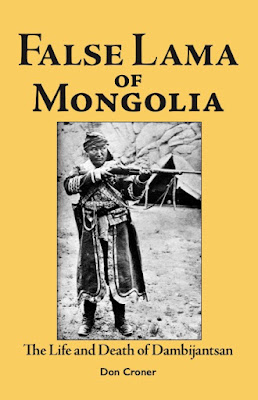
For more on Dambijantsan see False Lama of Mongolia: The Life and Death of Dambijantsan


Mongolia | Khovd Aimag | Baatar Khairkhan Uul

Baatar Khairkhan Uul  is a small mountain standing alone on the steppe 4.7 miles from downtown Khovd, just beyond the airport. It is clearly visible when you arrive in Khovd by airplane. Before 1912 Baatar Khairkhan Uul had two different names: Taliin Khairkhan Uul and Tsogt Khairkhan Uul. After 1912 the mountain was renamed Baatar Khairkhan Uul in honor of Magsarjav, one of the four military commanders during the attack on the Chinese Fortress in Khovd in 1912. After the city had been seized he was awarded the title of Khatan Baatar (warrior); hence Baatar Khairkhan Uul.
Baatar Khairkhan Uul stands alone on the steppe south of Khovd City
Baatar Khairkhan Uul 
Magsarjav, (1877-1927) was born in the banner of the Itgemjit Beis of Sain Noyon Khan Aimag. His father was a minor nobleman, but the family was not considered well-to-do.  Although thought to be a khuvilgaan, or incarnation of a minor Buddhist hierarch in western Mongolia, he apparently never considered a religious vocation. Magsarjav had been the Bogd Khan’s representative in Khovd City when Mongolian independence had been declared and had presented the Amban with the ultimatum to surrender the Khovd fortress and return to China. He had to sneak out of Khovd to avoid arrest after that affair and thus no doubt had own score to settle with the Amban. He appeared to have had little military experience, however, and one source calls him “an untried youth,” although he was thirty-five in 1912. 
On the north side of the mountain, visible from the airport, is a large depiction of the familiar Soyombo, the head symbol of the Soyombo alphabet designed by Zanabazar, the First Bogd Gegeen of Mongolia. This sign also occurs on the Mongolian flag, Mongolian currency, and innumerable other places. 
Soyombo Symbol on Baatar Khairkhan Uul
On the rocks at the base of the hill are what Professor Baasankhüü of Khovd, who accompanied me to the site, says are Bronze Age petroglyphs, including depictions of ibex, sheep, elk, deer, tigers or leopards, wolves, and, interestingly, a turtle. (He dates the Bronze Age to about 2000-5000 BP.) There are also Tibetan inscriptions from the seventeenth century, Sanskrit inscriptions, and  inscriptions in vertical script Mongolian, one of which says, “If you pray under this mountain you will be forgiven for the sins of 1000 years.” (According to the translation of the Professor, who reads vertical script Mongolian perfectly).
During the Siege of Khovd in 1912, Magsarjav camped near the mountain with his contingent of troops. He also maintained an observation post on the summit from which he could watch what was going on in Khovd. According to various accounts he also had monks perform chanting ceremonies on the summit of the hill to ensure the success of the upcoming battle.
It was at the base of Baatar Khairkhan Uul that Magsarjav performed the notorious "Blood Ceremony” in preparation for the attack on the Manchu Fortress in Khovd City. During the ceremony, which was meant to encourage the troops, a Chinese servant who had been captured in the city had his still-beating heart ripped from his chest. The Mongol war banners were then ceremoniously anointed with his blood. A man named Samand Baatar, who was one of Magsarjav’s soldiers, was an eyewitness to the ceremony. In 1970 he described the event in detail to Professor Baasankhüü of Khovd. It is widely believed that Dambijantsan, The Notorious Ja Lama, took part in the Blood Ceremony here at Baatar Khairkhan Uul. Samand Baatar maintained, however, that Dambijantsan was not present at Magsarjav’s ceremony, although he did reportedly perform his own Blood Ceremony at his camp on the Dund Tsenkher Gol near Mankhan.
Not until we had left Baatar Khairkhan Uul and were halfway back to Khovd did I realize I had forgotten to pray at the base of the hill.  
Bronze Age Petroglyphs
Bronze Age Petroglyphs and Vertical Script Mongolian inscriptions
Bronze Age Petroglyphs
Bronze Age Petroglyphs and Tibetan script
Bronze Age Petroglyphs


For more on Dambijantsan see False Lama of Mongolia: The Life and Death of Dambijantsan


Wednesday, June 10, 2020

Mongolia | Gov-Altai Aimag | Camel Trip | Approaching Atas Bogd Uul


After Solongo’s Fall From Her Camel we rode until the sun went down and then camped for the night. The next morning we were up before dawn, since we still had two long days of riding to reach our destination south of Atas Bogd Uul.


 Camp Boss Sister Dulya supervising the loading of a camel


  Camp Boss Sister Dulya signs off on a perfectly loaded camel 


Sister Dulya ready to ride


Riding into black shale hills


 Typical black shale hills of the Gobi


 After passing through the black shale hills we emerged on a huge gravel flat. This is the view looking west. 


 Crossing the gravel flat. You can’t tell it from this photo, but the wind was blowing a relentless  sixty miles an hour. 


 Looking south across the grave flats toward Atas Bogd Uul, just visible in the distance.  


Atas Bogd Uul from the southern edge of the gravel flats. In the foreground is a range of hills topped by 4,705-foot Arslan Khairkhan Uul, so named because the peak is said to resemble a crouching lion (arslan). 


 Approaching the Arslan Khairkhan Hills 


  Although still smarting from the fall from her camel, Solongo was able to build a fire and brew up fresh tea during our tea break, in this case A Superb 2003 Vintage Puerh


Pass through the Arslan Khairkhan Hills


Near the pass through the Arslan Khairkhan Hills


Beyond the Arslan Khairkhan Hills is a wide strip and sand and gravel desert.


  Continuing on  across the sand and gravel desert . . . Solongo is riding on top of a load on one of the pack camels. Her camel had ran off the day before. 


Taking a break 


We camped for the night just east of 8,842-foot Atas Bogd Uul, a sentinel visible for hundreds of miles around.