Thursday, February 20, 2025

Türkiye | Tur Abdin | Mor Gabriel Monastery

After visiting Midyat we wandered down to Mor Gabriel Monastery, twelve miles southeast of Midyat and fifteen miles north of the Syrian border. Here, at least, Syriac Christianity appears to be surviving. This is one of the oldest monasteries in the world. It was founded in 397 by Mor (saint) Samuel (d. 433) and Mor Simon (d. 409). Originally it was called the Monastery of Mor Samuel and Mor Simon, but in the seventh century it was renamed Mor Gabriel Monastery after Mor Gabriel (634-668), the bishop of the Tur Abdin Region. Except for brief periods during wars and civil disorders the monastery has operated continuously since the year 397. Visitors are not allowed to wander around the grounds by themselves (although you can stay overnight if you make previous arrangements), but a guide is provided to give you a tour. Our guide, a young Syriac Christian, spoke perfect, unaccented English. 

Entrance to the monastery (click on photos for enlargements)

Entrance to the courtyard

Inner courtyard of the monastery

Monastery grounds

Steeples

This circular room, a later addition to the original monastery, was built in the sixth century with funds provided by the notorious Empress Theodora, the wife of Byzantine Emperor Justinian I

Circular Room. The small windows on the dome open on monks’ cells. 

Our guide related that Theodora was born near here, in what is now Syria, and that her father was a Syriac priest. It was this connection with the area and the Syriac Church that motivated her to make a sizable donation to the monastery for the purpose of building this room. This is the sanitized version of Theodora’s background. Most sources do agree that she was born in Syria, but many maintain that Theodora was the daughter of a bear trainer and a professional dancer and actress. They began pimping out Theodora and her sister Komito when they were both pre-adolescents. Theodora quickly began one of Constantinople’s most notorious prostitutes. If we are to believe the Byzantine historian Procopius (c. AD 500 – c. AD 565), who probably knew her personally, Theodora engaged in behaviour which would make even Kim Kardashian blush:
One night she went into the house of a notable during the drinking, and, it is said, before the eyes of all the guests she mounted the protruding part of the couch near their feet and forthwith pulled up her dress in the most disgraceful manner, and did not shy away from displaying her lasciviousness. And though she made full use of three orifices, she often found fault with Nature, complaining that Nature had not made the holes in her nipples larger so that she could devise another variety of intercourse there. Of course, she was frequently pregnant, but by using pretty well all the tricks of the trade she was able to induce an immediate abortion. Often in the theatre too, in the full view of the people, she would throw off her clothes and stand naked in their midst, having only a pair of knickers over her private parts and her groin – not, however, because she was ashamed to expose these also to the public, but because no one is allowed to appear there absolutely naked: underwear over the groin is compulsory. And with this costume she would spread herself out and lie on her back on the floor. Certain menials on whom this task had been imposed would sprinkle barley grains over her private parts, and geese trained for the purpose used to pick them off with their beaks one by one and swallow them. Theodora, far from blushing when she stood up again, actually seemed to be proud of this performance. For she was not only shameless herself but did more than anyone else to encourage shamelessness. And many times she threw off her clothes and stood in the middle of the actors on the stage, leaning over backwards or pushing out her rear to invite both those who had already enjoyed her and those who had not been intimate as yet, parading her own special brand of gymnastics. With such lasciviousness did she misuse her own body that she appeared to have her privates not like other women in the place intended by nature but in her face! And again, those who were intimate with her showed by so doing that they were not having intercourse in accordance with the laws of nature, and a person of any decency who happened to meet her in public would swing round and beat a hasty retreat, for fear he might come into contact with any of the hussy’s garments and so appear tainted with this pollution. For to those who saw her, especially in the early hours of the day, she was a bird of ill omen. (Quoted from Procopius’s Secret History)
None of this mattered to Emperor Justinian, who became besotted with Theodora and eventually married her. As the wife of a Byzantine emperor Theodora might well have wanted to upgrade her image by donating money to religious institutions. Thus she has been memorialized here at Mor Gabriel Monastery. Justinian himself initiated the construction of Aya Sofia in Istanbul, to this day one of the most magnificent religious structures in the world. Maybe he was feeling guilty about marrying a nymphomaniacal prostitute and wanted to do something to atone for it?

Theodora (c. 500 – 28 June 548) portrayed on a mosaic in a church in Ravenna, Italy (not my photo)

This was probably the dining hall in the monastery

A book, I believe a Bible, but I am not sure, in Syriac Script. The Syriac Language is closely related to Aramaic, the language spoken by Jesus of Nazareth, leader of the Galileans.

The Syriac Script was based on the ancient Aramaic Script. The Sogdians of Inner Asia adapted the Syriac Script into their own Sogdian Script; the Uighurs in what is now Xinjiang Province in China adapted the Sogdian Script into their own Uighur Script; and later the Uighur Script was used as the basis for the Traditional Mongolian Script. Thus the Mongolian Vertical Script, which is experiencing somewhat of a revival in Mongolia, can be traced back to the ancient Aramaic Script, a variation of which is still used by Syriac Christians in Turkey today. 
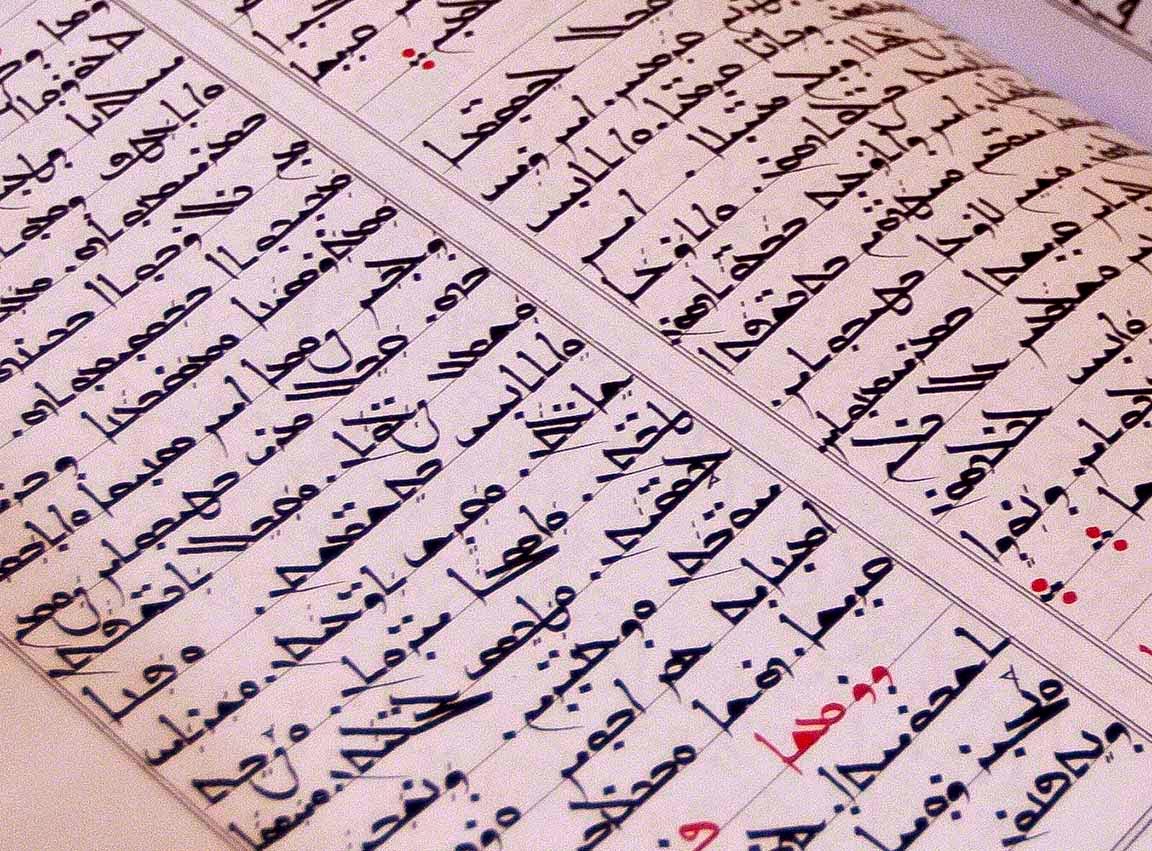
Closer view of Syriac Script. 
A Syriac inscription on a wall in the monastery

New addition to the monastery. Local stone carvers and masons have lost none of their traditional skills.
Good example of local stonework

Thursday, August 29, 2024

Tuesday, July 2, 2024

Uzbekistan | Seven Saints of Bukhara


According to the thirteen-century Persian historian Ata-Malik Juvaini, Bukhara, the city in what is now the country of Uzbekistan, “is the cupola of Islam and is in those regions like unto the City of Peace [Baghdad] . . . Since ancient times it has in every age been the place of assembly of the great savants of every religion.”


In the twelfth, thirteenth and fourteenth centuries seven remarkable men lived in Bukhara and the surrounding Bukhara Oasis. These men were known as the Khwajagan, or Masters of Wisdom. The Seven Khwajagan are: Abd al-Khaliq al-Ghujdawani (1103–1179); Arif ar-Riwakri (1136-1239); Mahmud al-Injir al-Faghnawi (d.1317);Ali ar-Ramitani (d.1315/1321); Muhammad Baba as-Sammasi (d.1354); Sayyid Amir Kulal (1287?–d.1370); Bahauddin Shah Naqshband (1318–1388?)

The Khwajagan remain to this day revered as the Seven Saints of Bukhara, and their mausoleum complexes continue to be visited by pilgrims and travelers from all over the world.

Tuesday, March 5, 2024

Italy | Venice | Early Life of Enrico Dandolo

There are few greater ironies in History than the fact that the fate of Eastern Christendom should have been sealed—and half of Europe condemned to some five hundred years of Muslim rule—by men who fought under the banner of the Cross. Those men were transported, inspired, encouraged, and ultimately led by Enrico Dandolo in the name of the Venetian Republic; and, just as Venice derived the major advantage from the tragedy, so she and her magnificent old doge must accept the responsibility for the havoc that they have wrought on the world. —Byzantium: The Decline and Fall—John Julius Norwich

Venetian Doge Enrico Dandolo (c.1107–1205) was one of the leaders of the Fourth Crusade and the mastermind behind the Sack of Constantinople in 1204. The stated goal of the Fourth Crusade, initiated by Pope Alexander III and launched in 1202, was to recapture the holy city of Jerusalem, which had been seized by the Saladin, the Muslim sultan of Egypt, Syria, Yemen, and Palestine, on October 2, 1187, ending nearly of nearly nine decades of occupation by the Occidental Crusaders. By the time the Crusaders reached Constantinople, however, the Venetian continence, led by Enrico Dandolo, was more concerned with collecting the money they claimed was owned to them by Byzantine Emperor Alexios IV (r. August 1203 to January 1204). Relations between the Venetians and the Byzantines quickly deteriorated and outright war soon broke out. On April 3, 1204, the Crusaders attacked the heavily fortified city. Enrico Dandolo himself, probably ninety-seven years old at the time and almost completely blind, led a contingent of troops to the city’s sea walls. Constantinople fell to the Crusaders on April 13.  Historian Speros Vryonis describes what happened next:


The Latin soldiery subjected the greatest city in Europe to an indescribable sack. For three days they murdered, raped, looted and destroyed on a scale which even the ancient Vandals and Goths would have found unbelievable. Constantinople had become a veritable museum of ancient and Byzantine art, an emporium of such incredible wealth that the Latins were astounded at the riches they found. Though the Venetians had an appreciation for the art which they discovered (they were themselves semi-Byzantines) and saved much of it, the French and others destroyed indiscriminately, halting to refresh themselves with wine, violation of nuns, and murder of Orthodox clerics. The Crusaders vented their hatred for the Greeks most spectacularly in the desecration of the greatest Church in Christendom. They smashed the silver iconostasis, the icons and the holy books of Hagia Sophia, and seated upon the patriarchal throne a whore who sang coarse songs as they drank wine from the Church’s holy vessels . . . The defeat of Byzantium, already in a state of decline, accelerated political degeneration so that the Byzantines eventually became easy prey to the Turks. The Fourth Crusade and the crusading movement generally thus resulted, ultimately, in the victory of Islam, a result which was of course the exact opposite of its original intention.


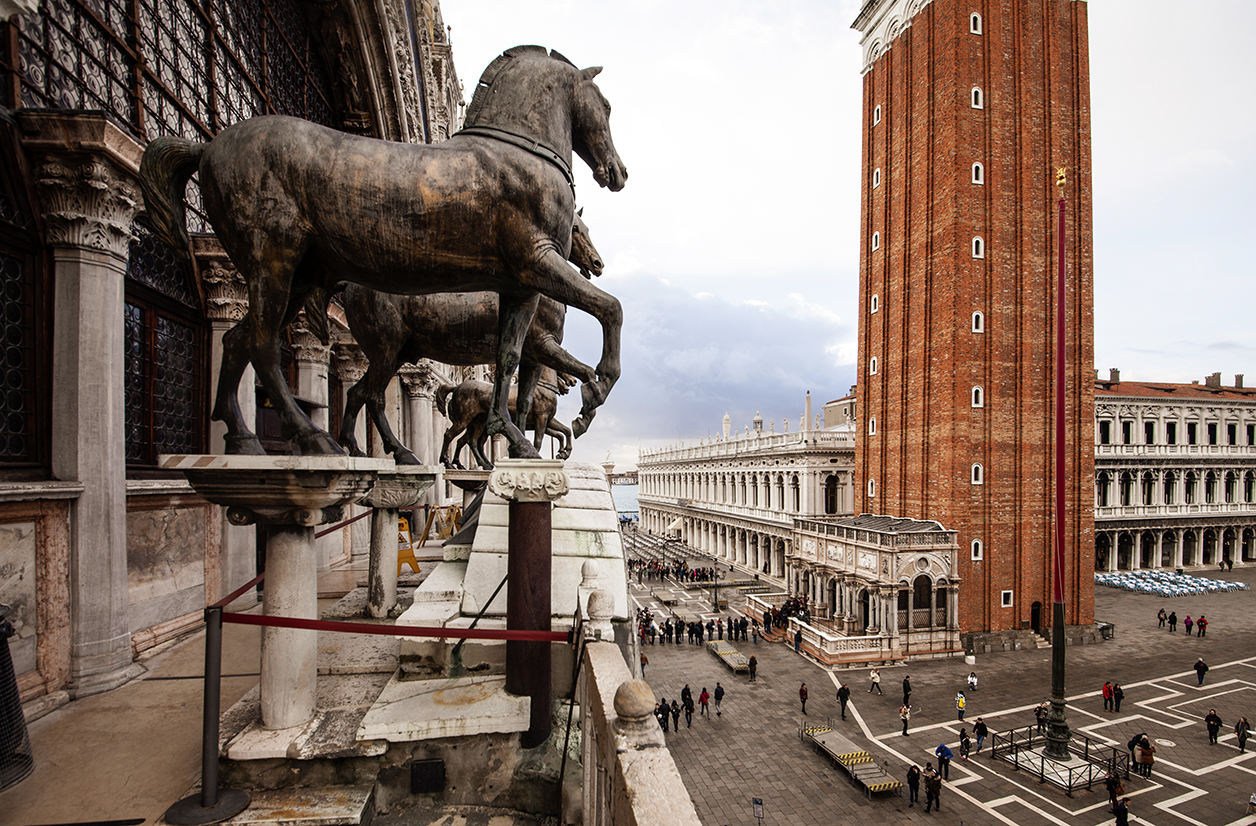
Much of the loot seized by Enrico Dandolo and the Venetians during the sack of Constantinople can still be seen in Venice today, including, perhaps most notably, the Four Horses that once stood in the Hippodrome in Constantinople. They are now in the St. Mark’s Basilica Museum. Reproductions of the Horses grace the facade of the Basilica, mute reminders of Enrico Dandolo’s equivocal role in world history.

Wanders in Venice: The Early Life of Enrico Dandolo, Mastermind of the Fourth Crusade and the 1204 Sack of Constantinople traces the rise of the Dandolo Family to prominence in Venice and the life of Enrico Dandolo up until he was appointed Doge in 1192.


Reproductions of The Four Horses that once stood in the Hippodrome in Constantinople. The originals are now in the St. Mark’s Basilica Museum.

Monday, January 22, 2024

Mongolia | In Search of Shambhala: The 1925-1928 Roerich Expedition in Ulaanbaatar, Mongolia

The 1925-1928 Roerich Expedition, led by artist, mystic, spy, arch-intriguer, and hard-core Aghartian-Shambhalist Nicholas Roerich, was believed by some to be a khora, or circumnavigation, of the legendary kingdom of Shambhala. The Expedition spent seven months in Ulaanbaatar, the capital of Mongolia. Everywhere they turned the Roerichs stumbled upon signs of Shambhala . . . Continued . . .


Monday, January 1, 2024

Iran | Yazd | Carpets

While in Yazd I wandered by a complex of shops selling pottery, brass and copper work, fabrics, clothes, carpets, and other items of interest to tourists, gadabouts, and pilgrims, both domestic and international. 
Courtyard of the shopping complex (click on photos for enlargements)
Pottery for sale at the complex
I was most interested in carpets. Stepping into one store I was surprised to see a selection of carpets very much like some that I already had in my hovel in Zaisan Tolgoi. I had bought mine in Bukhara, Uzbekistan, however. “Where are these carpets made?” I asked. I fully expected the salesmen to say “Yazd”, since most visitors are interested in buying locally made products. Instead he answered, “They are made in Serakhs.” “Serakhs, Iran, or Serakhs, Turkmenistan?” I wondered. The salesmen smiled, “Probably both.”
Salesmen in carpet store
I have of course been in Serakhs, Turkmenistan, since it was one of the cities trashed by Chingis Khan’s son Tolui in 1221. I did not have an Iranian visa at the time, so I could not visit Serakhs in Iran, which is right across the border. Nor did I have time to check out carpets stores, as my Turkmenistan visa was expiring and I had to get back to Ashgabat.
Ruins of the ancient city of Serakhs, destroyed by Tolui. The modern city is nearby, with a sister city just across the border in Iran.
Serakhs carpets in Yazd
Serakhs carpets  in Yazd
Serakhs carpets
Serakhs carpets  in Yazd
These kinds of carpets, single knotted silk, with emphasis on the color red, are often called “Bukhara Carpets” or “Bukharans”, after Bukhara in Uzbekistan. They were given these names because they were commonly sold in Bukhara, one of the great Silk Road emporiums, not because they were made there. Even today dealers in Bukhara will try to tell you that they are made in Bukhara, but even the most cursory investigation will prove this not to be true. The salesmen in the stores adamantly stick to this story, however. Someone else in Bukhara, a salesman in a store selling hand-woven fabrics who appeared to have a grudge against the carpets guys, warning me that they were dyed-in-the-wool liars and not to believe a word they said about anything, told me that it was common knowledge among local merchants that the carpets in question came from Serakhs, in Turkmenistan.  I seem to have found proof of this assertion here in Yazd. 
Carpet Store in the Abdullah Khan Tim in Bukhara 
“Bukharan” carpets in the Abdullah Khan Tim. In all likelihood they were made in Serakhs.
“Bukharan” carpets
“Bukharan” carpets
A “Bukharan” carpet, probably made in Serakhs, on the floor of my hovel in Zaisan Tolgoi, Mongolia.
Regardless of where they are made, they are gorgeous carpets. I showed one to some Carpet Guys In Istanbul and they grudgingly admitted—they are not big fans of single-knot carpets—that they were of excellent quality. One dealer even offered me cash for one. The profit would have covered my plane ticket to Ashgabat, but I passed. I certainly do not want to become even a part-time carpet dealer, a profession which on the social scale is only slightly above pimps, prostitutes, bartenders, and lawyers. 

Sunday, December 17, 2023

Italy | Venice | Palazzo Rizzi


Wandered by Venice and am back in my usual digs, an old nunnery which has been converted into a hotel. The building, once the Palazzo Rizzi, is located on the Fondamenta Rizzi, about a five minute walk from the Piazzale Roma, where all buses from the mainland terminate. The hotel is still owned and operated by St. Joseph’s Daughters of Caburlotto, the religious order that occupied the nunnery. As befitting an old nunnery, the rooms are tiny and spartan, to say the least. My bed is about three feet wide—all that was needed by a nun—and my ankles hang over the end, but the room does have a desk and enough electrical outlets to keep all my devices topped up. What else does one need in a room? There is also a midnight to 6:00 a.m. curfew. You cannot enter or leave the building during those hours. This is of no importance to me. Venice is not a night-life city by any stretch of imagination, and I myself would never have any reason to stay out past midnight. The Fondamenta Rizzi, the walkway on which the hotel is located, does not even have a convenience store and is as quiet as Ligeia’s tomb after nine p.m. 

Fondamenta Rizzi on the right (click on photos for enlargements)
The old Palazzo Rizzi, later a nunnery and now a hotel
Venice
Venice. The leaning bell tower is not a photographic distortion. It actually does lean that way.
Canal of San Luca
The Piazzetta in Venice
Piazza and Church of San Marco
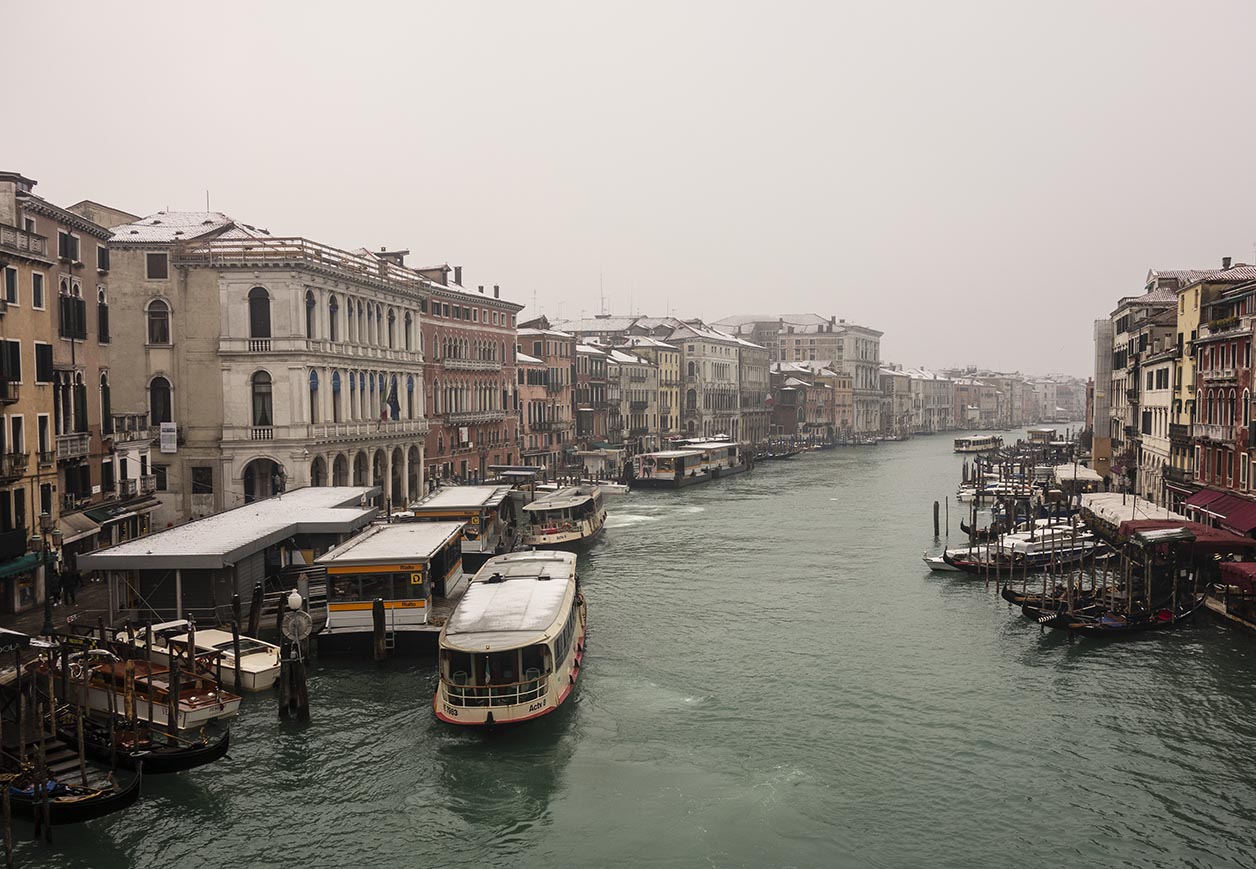
Grand Canal from the Rialto Bridge

Friday, December 8, 2023

Mongolia | Ulaanbaatar | Soyolma

New painting by Mongolian artist Soyolma (click on photos for enlargements).

Soyolma in her studio. The painting  behind her is now in my Zaisan Tolgoi Galleria.

Soyolma’s painting in my Galleria

Soyolma is also a thangka painter. Here is a White Tara thangka she painted for me. 
Now in my Galleria. 

Wednesday, November 1, 2023

Mongolia | Ulaanbaatar | Soyolma and Davaanyam

Shook the dust off my mukluks and wandered into town for a showing of new works by Mongolian artist Soyolma and her husband Davaanyam. I already have a number of Soyolma’s paintings on display in the Galleria of my Hovel in Zaisan Tolgoi. 
Soyolma and one of her new works (click on photos for enlargements)
Detail of new work by Soyolma
Work by Soyolma
Detail of work by Soyolma
Work by Soyolma
Work by Soyolma
Green Tara by Soyolma
Soyolma and Green Tara
Work by Soyolma
Detail of work by Soyolma
Work by Soyolma
Large Triptych by Soyolma. This work was earlier displayed in New York City.
Detail of Large Triptych
Text explaining the Triptych

Tuesday, September 26, 2023

Saturday, September 2, 2023